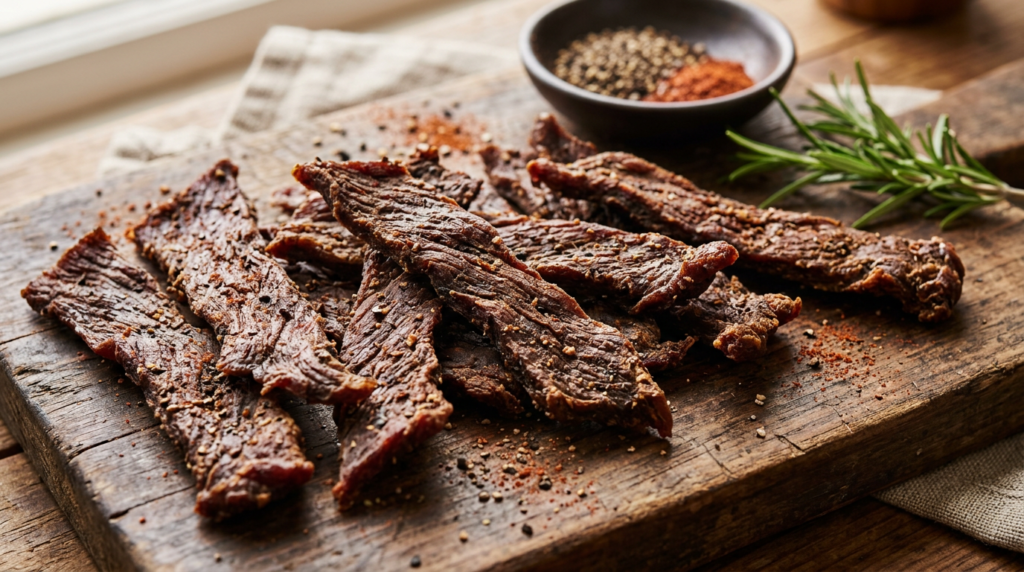
Tired of store-bought beef jerky that’s either loaded with sugar, preservatives, or comes with a hefty price tag? Imagine a savory, chewy, protein-packed snack that perfectly fits your keto lifestyle, made right in your own kitchen. This homemade keto high-protein beef jerky recipe is a game-changer for anyone seeking a delicious, low-carb, and satisfying snack. It’s an ideal solution for meal prep, busy days, or simply when you crave something substantial and flavorful without derailing your dietary goals.
Crafting your own beef jerky gives you complete control over the ingredients, allowing you to customize the flavors to your exact preference while ensuring it remains sugar-free and packed with lean protein. The process is surprisingly straightforward, primarily involving a simple marinade and the magic of a food dehydrator. The result? Perfectly firm, yet pliable strips of beef, bursting with umami, a hint of smokiness, and a delightful chew that keeps you coming back for more. You’ll love the rich, savory depth of flavor and the satisfying texture that makes this jerky an irresistible treat. Get ready to elevate your snack game with this ultimate homemade keto beef jerky recipe!
Recipe Info:
Prep Time: 25 minutes | Marinating Time: 4-24 hours | Dehydrating Time: 4-8 hours | Total Time: 4 hours 25 minutes – 24 hours 25 minutes | Yield: Approximately 1 pound
Ingredients
- 2 lbs lean beef (such as top round, eye of round, or sirloin), trimmed of all visible fat
- 1/2 cup tamari or low-sodium soy sauce (use tamari for gluten-free)
- 1/4 cup Worcestershire sauce (check for sugar-free options if strict keto)
- 2 tablespoons apple cider vinegar
- 1 tablespoon liquid smoke
- 1 tablespoon garlic powder
- 1 tablespoon onion powder
- 1 teaspoon black pepper
- 1/2 teaspoon cayenne pepper (optional, for a kick)
- 1/2 teaspoon smoked paprika
- 1/4 teaspoon erythritol or other keto-friendly sweetener (optional, to balance flavors)
Step-by-Step Instructions
- Prepare the Beef: For easier slicing, place the beef in the freezer for 30-60 minutes until it is firm but not frozen solid. Using a very sharp knife, slice the beef against the grain into uniform strips, about 1/8 to 1/4 inch thick. Trim off any remaining fat, as fat can cause the jerky to spoil faster.
- Make the Marinade: In a large bowl or a gallon-sized resealable bag, combine the tamari (or soy sauce), Worcestershire sauce, apple cider vinegar, liquid smoke, garlic powder, onion powder, black pepper, cayenne pepper (if using), smoked paprika, and optional erythritol. Whisk or shake well to combine all ingredients.
- Marinate the Beef: Add the sliced beef strips to the marinade, ensuring all pieces are fully coated. Seal the bag or cover the bowl and refrigerate for at least 4 hours, or preferably 12-24 hours, to allow the flavors to deeply penetrate the meat. The longer it marinates, the more flavorful your jerky will be.
- Prepare for Dehydrating: Once marinated, remove the beef strips from the bag and pat them thoroughly dry with paper towels. This step is crucial for efficient dehydration and to prevent a leathery exterior. Arrange the strips in a single layer on your dehydrator trays, making sure they do not overlap.
- Dehydrate the Jerky: Set your food dehydrator to 160°F (70°C). Dehydrate for 4-8 hours, or until the jerky is dry, firm, and leathery. The exact time will depend on the thickness of your beef slices and your dehydrator model.
- Check for Doneness: To test if the jerky is ready, remove a piece and let it cool to room temperature. It should be pliable and bend without breaking, but it should not feel moist or spongy. If it snaps cleanly, it’s over-dehydrated. If it feels soft or wet, continue dehydrating.
- Cool and Store: Once done, remove the jerky from the dehydrator and let it cool completely on a wire rack before storing. This allows any residual moisture to evaporate and prevents condensation.
Pro Tips for Success
- Slice Uniformly: Consistency in slice thickness is key for even drying. Partially freezing the beef makes it much easier to achieve thin, uniform strips against the grain.
- Pat Dry Thoroughly: After marinating, ensure you pat the beef strips as dry as possible with paper towels. Excess moisture will prolong the dehydration time and can lead to a less desirable texture.
- Don’t Overcrowd Trays: Give each strip enough space on the dehydrator trays for proper air circulation. Overlapping pieces will dry unevenly and take longer.
- Test for Perfect Doneness: The ideal jerky bends without breaking and has a leathery, firm texture. It shouldn’t be brittle or crumbly, nor should it feel soft or moist. Start checking around the 4-hour mark and continue every hour until perfect.
Variations & Substitutions
- Spicy Kick: Increase the cayenne pepper to 1 teaspoon or add a pinch of red pepper flakes to the marinade for extra heat.
- Smoky Flavor Boost: For an even deeper smoky profile, add 1/2 teaspoon of liquid smoke or 1 tablespoon of smoked paprika to the marinade.
- Sweet & Savory: If you enjoy a touch of sweetness, increase the keto-friendly sweetener to 1/2 teaspoon or add a dash of sugar-free maple syrup alternative.
- Gluten-Free: Always use tamari instead of traditional soy sauce to ensure the recipe remains gluten-free.
- Different Cuts: While top round is excellent, you can also experiment with other lean cuts like flank steak or even venison for a wild game jerky.
Serving Suggestions
Homemade keto beef jerky is a versatile and satisfying snack that can be enjoyed in many ways. It’s perfect on its own as a quick protein boost between meals, a post-workout refuel, or a convenient travel snack. Pair it with a handful of nuts, some cheese cubes, or a few olives for a balanced keto mini-meal. It also makes an excellent addition to a low-carb charcuterie board or a packed lunch for work or school.
Storage & Reheating
Once completely cooled, store your homemade keto beef jerky in an airtight container or a resealable bag at room temperature for up to 1-2 weeks. For longer storage, you can refrigerate it for up to 1 month or freeze it for up to 3-6 months. If freezing, thaw it at room temperature or in the refrigerator before enjoying. No reheating is necessary; it’s best enjoyed at room temperature.
Frequently Asked Questions
What kind of beef is best for jerky?
Lean cuts of beef with minimal fat are ideal for jerky, as fat can go rancid and shorten the shelf life. Top round, eye of round, and sirloin are excellent choices due to their leanness and texture.
How do I know when my jerky is perfectly done?
The jerky is done when it’s firm, leathery, and bends without breaking. It should not feel moist or spongy, and when you tear a piece, you shouldn’t see any raw, red meat fibers inside.
Can I make this jerky in an oven instead of a dehydrator?
Yes, you can! Preheat your oven to its lowest setting (usually around 170°F/77°C). Arrange the beef strips on wire racks placed over baking sheets. Prop the oven door open slightly with a wooden spoon to allow moisture to escape. Bake for 3-6 hours, flipping occasionally, until the jerky reaches the desired texture.
Final Thoughts
There’s immense satisfaction in creating your own high-protein, keto-friendly beef jerky. This recipe not only delivers on flavor and texture but also empowers you to take control of your snacking habits with a wholesome, homemade option. Say goodbye to questionable ingredients and hello to a delicious, guilt-free treat that will keep you fueled and satisfied. Give this dehydrator recipe a try, and prepare to be amazed by the rich, savory goodness of your very own beef jerky!