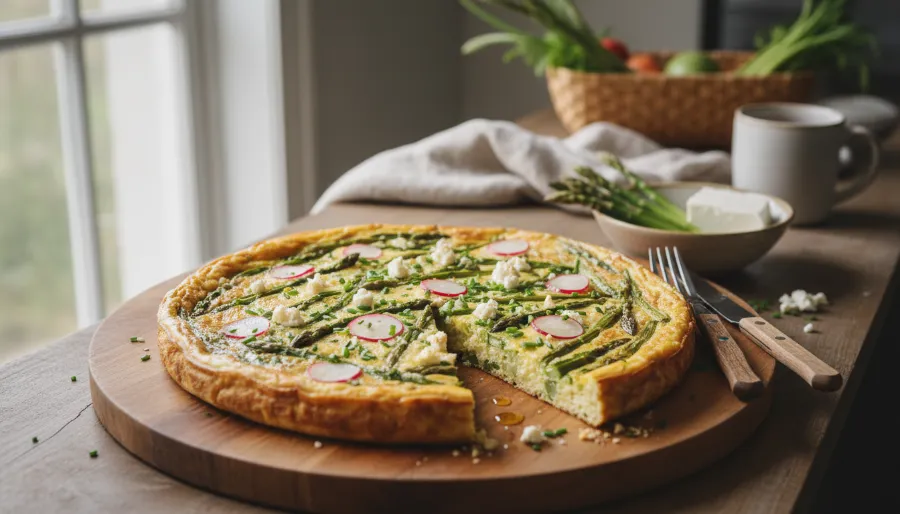
Keto Spring Veggie Frittata is a colorful, high-protein one-pan breakfast or brunch dish loaded with fresh asparagus, spinach, and tangy feta cheese for a meal that celebrates spring flavors while fitting perfectly into a low-carb lifestyle. Fluffy eggs form the base, while seasonal vegetables and Mediterranean cheese create layers of flavor and nutrition in a dish that can be served hot, warm, or at room temperature—making it ideal for Easter brunches, Mother’s Day breakfasts, meal prep, or any time you want a simple yet impressive egg dish.
Frittatas are beloved because they are incredibly versatile: you can customize them with whatever vegetables, meats, and cheeses you have on hand, they feed a crowd with minimal effort, and they work for breakfast, lunch, or dinner. As spring arrives in late March and April, fresh asparagus and baby spinach are at their peak, and searches for “frittata recipes,” “spring breakfast ideas,” and “egg bake recipes” spike as people embrace lighter, vegetable-forward meals and plan for spring holiday entertaining.
Unlike omelets that require careful folding and timing, or quiches that need a crust and longer baking time, frittatas are forgiving and straightforward: you sauté your fillings, pour beaten eggs over the top, and finish everything in the oven until golden and set. This Keto Spring Veggie Frittata takes about 30 minutes from start to finish and delivers 20–25 grams of protein per serving with only 4–6 net carbs, making it a macro-friendly choice for any meal of the day.
Why keto spring veggie frittata works so well
Frittatas are naturally keto-friendly because they are built on eggs—one of the most perfect keto foods—and can be loaded with low-carb vegetables and full-fat cheese without needing any flour, breadcrumbs, or starchy fillings.
Here is why this recipe fits keto so perfectly:
- Eggs provide about 6 grams of protein each and are rich in healthy fats, vitamins, and minerals.
- Asparagus is one of the lowest-carb spring vegetables (about 2 grams net carbs per cup) and adds fiber, folate, and vitamins A, C, and K.
- Spinach is virtually carb-free and packed with iron, antioxidants, and nutrients.
- Feta cheese adds tangy, salty flavor, extra protein, and healthy fats while keeping carbs minimal.
- One-pan cooking means everything cooks together in a single oven-safe skillet, making prep and cleanup simple.
The combination of asparagus, spinach, and feta is classic Mediterranean flavor that feels fresh and spring-like, while the eggs create a fluffy, satisfying base that holds everything together.
Ingredients you’ll need
This recipe serves 6–8 as a main breakfast or 10–12 as part of a larger brunch spread.
For the frittata:
- 10 large eggs
- ¼ cup heavy cream or unsweetened almond milk
- ½ tsp salt
- ¼ tsp black pepper
- 2 tbsp olive oil or butter
- 1 bunch asparagus (about 1 lb), tough ends trimmed, cut into 1-inch pieces
- 2 cups fresh baby spinach, roughly chopped
- 1 small onion or 2 shallots, diced
- 2 cloves garlic, minced
- ¾ cup crumbled feta cheese
- Optional: 2 tbsp fresh dill or parsley, chopped
- Optional: cherry tomatoes, halved, for extra color
For serving:
- Extra crumbled feta
- Fresh herbs for garnish
- Lemon wedges
- Optional: a simple green salad on the side
Using a 10-inch or 12-inch oven-safe skillet (cast iron works beautifully) is essential for this recipe since the frittata starts on the stovetop and finishes in the oven.
Step-by-step instructions
1. Preheat the oven
Preheat your oven to 375°F (190°C).
2. Whisk the eggs
In a large bowl, whisk together eggs, heavy cream or almond milk, salt, and black pepper until well combined and slightly frothy. Set aside.
3. Sauté the vegetables
Heat olive oil or butter in a large oven-safe skillet (10–12 inches) over medium heat. Add diced onion or shallots and cook for 3–4 minutes until softened and translucent.
Add minced garlic and cook for another 30 seconds until fragrant.
Add asparagus pieces and cook for 4–5 minutes, stirring occasionally, until the asparagus is bright green and just tender but still has a slight bite.
Add chopped spinach and cook for 1–2 minutes until wilted. If there is excess moisture in the pan, let it evaporate before moving to the next step.
4. Add the eggs
Spread the vegetables evenly across the bottom of the skillet. Sprinkle about half of the crumbled feta over the vegetables.
Pour the beaten egg mixture evenly over the vegetables and feta, letting it settle into all the spaces. Sprinkle the remaining feta on top, along with optional cherry tomatoes and fresh herbs.
5. Cook on the stovetop briefly
Let the frittata cook undisturbed on the stovetop over medium heat for 2–3 minutes, just until the edges start to set. The center will still be very liquidy—this is normal.
6. Transfer to the oven
Carefully transfer the skillet to the preheated oven. Bake for 15–20 minutes, or until the frittata is puffed, golden on top, and set in the center. A knife inserted in the middle should come out clean.
The frittata will puff up in the oven and then settle slightly as it cools—this is normal.
7. Cool slightly and serve
Remove the skillet from the oven (be careful—the handle will be very hot!) and let the frittata cool for 5–10 minutes before slicing.
Cut into wedges and serve warm, at room temperature, or cold. Garnish with extra feta, fresh herbs, and lemon wedges.
Serving ideas and presentation tips
Keto Spring Veggie Frittata is incredibly versatile and can be served in multiple ways.
For Easter or Mother’s Day brunch:
- Serve warm wedges on a platter garnished with fresh dill and lemon wedges, alongside fresh fruit and keto-friendly pastries.
For meal prep:
- Cut into individual wedges and store in the fridge; reheat in the microwave or enjoy cold for quick breakfasts or lunches throughout the week.
For dinner:
- Pair with a simple arugula salad and roasted vegetables for a light spring dinner.
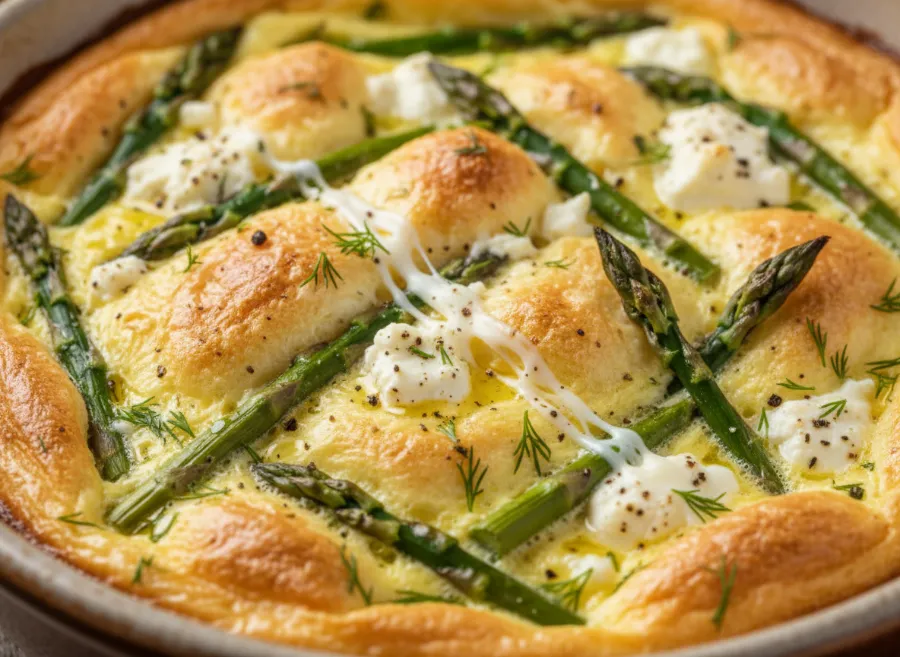
For Pinterest, overhead photos of the golden frittata in a cast-iron skillet with visible asparagus, spinach, and white feta crumbles create a beautiful, save-worthy image that performs extremely well in spring breakfast and brunch feeds.
Flavor variations
Frittatas are endlessly customizable, and offering variations helps your content appeal to different tastes.
- Italian sausage frittata: Add cooked Italian sausage and use mozzarella and Parmesan instead of feta.
- Smoked salmon frittata: Replace vegetables with smoked salmon, capers, and cream cheese for a lox-inspired version.
- Mexican frittata: Use bell peppers, jalapeños, chorizo, and cheddar cheese with a side of salsa.
These variations can become future pins like “Italian Sausage Frittata” or “Smoked Salmon Frittata” using the same base technique.
Why this recipe is perfect for spring entertaining
Frittatas are a brunch staple because they can be made ahead, served at any temperature, and easily scaled up or down. As Easter and Mother’s Day approach in late March and April, searches for “brunch recipes,” “egg bake,” and “spring breakfast ideas” spike dramatically.
This Keto Spring Veggie Frittata is ideal because:
- Showcases spring vegetables like asparagus and spinach at their peak.
- Feeds a crowd with minimal effort and one pan.
- Make-ahead friendly can be baked the night before and served at room temperature.
- Looks impressive with beautiful layers of green vegetables and white feta.
Publishing this recipe in April will capture readers searching for “spring frittata,” “keto brunch recipes,” “asparagus frittata,” and “Easter breakfast ideas.”
How to fit this into a keto plan
This frittata is naturally keto-friendly and offers excellent macros:
- Net carbs: About 4–6 grams per serving, primarily from the vegetables.
- Protein: 20–25 grams per serving from eggs and feta.
- Fat: Moderate to high from eggs, cheese, and olive oil, supporting satiety.
Because it is high in protein and fiber from the vegetables, one slice is very filling. Pair with avocado, bacon, or sausage if you want to increase fat intake.
Meal prep, storage, and reheating
Frittatas are one of the best meal-prep breakfasts because they store beautifully and reheat well.
- Make ahead: Bake the frittata completely, let cool, cover, and refrigerate for up to 5 days.
- Fridge: Store wedges in airtight containers for easy grab-and-go breakfasts.
- Freezer: Frittata can be frozen for up to 2 months; thaw overnight in the fridge and reheat gently.
- Reheating: Microwave for 1–2 minutes or reheat in a 350°F oven until warmed through.
For best results, add fresh herbs and extra feta just before serving for the brightest flavor.
Tips for perfect frittata every time
- Use an oven-safe skillet: Cast iron works beautifully and creates a nice crust on the bottom.
- Do not overcook: The frittata should be just set in the center; overcooking makes it rubbery.
- Let it rest: Cooling for 5–10 minutes makes slicing easier and allows the eggs to set fully.
- Customize freely: Use whatever vegetables, meats, and cheeses you have on hand.
- Serve at any temperature: Frittatas are delicious hot, warm, or cold.
These tips help your readers achieve a perfectly fluffy, golden frittata with tender vegetables and creamy feta every time.