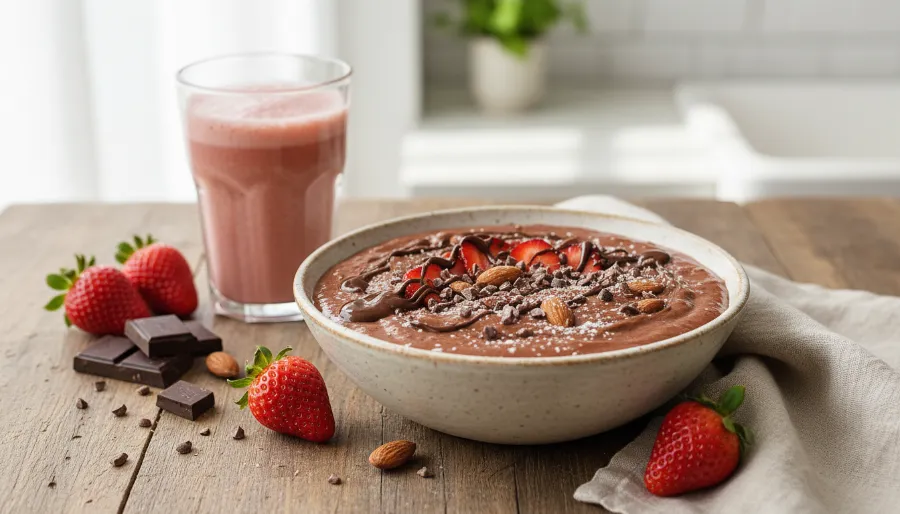
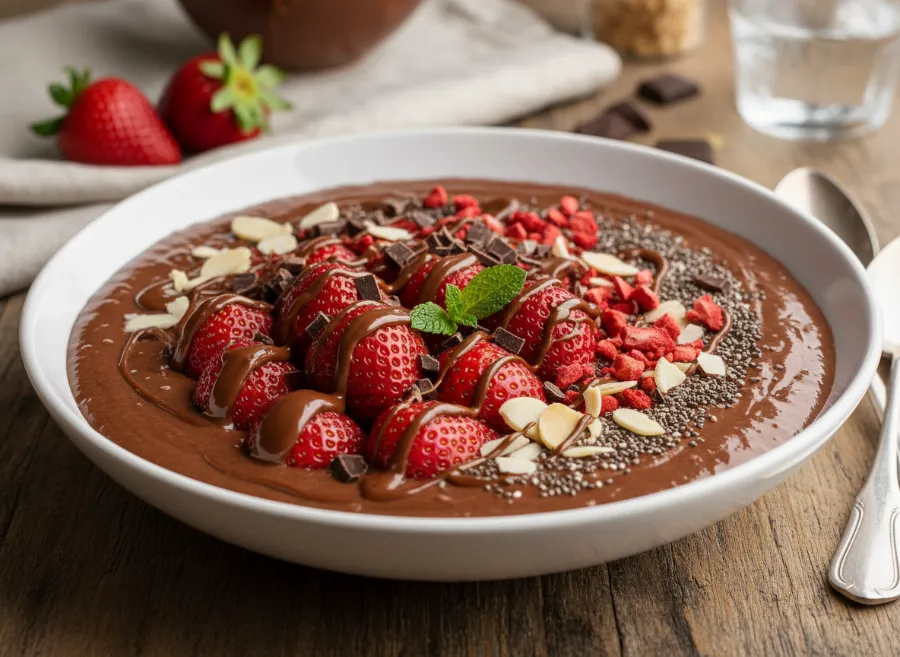
A Keto Chocolate-Covered Strawberry Smoothie Bowl is a thick, creamy, high-protein breakfast that tastes like dessert but fits perfectly into a low-carb lifestyle. Blending frozen strawberries, unsweetened cocoa powder, Greek yogurt or cottage cheese, and a scoop of protein powder creates a rich, spoonable smoothie base that you can top with fresh berries, sugar-free chocolate chips, coconut flakes, and other crunchy toppings for a Valentine’s-worthy breakfast that looks as good as it tastes.
Smoothie bowls have surged in popularity because they turn a drinkable smoothie into a meal you can eat with a spoon, which feels more satisfying and allows for creative, photogenic toppings. Chocolate-covered strawberry flavors peak every February around Valentine’s Day, making this the perfect time to publish a recipe that combines that classic pairing with high protein and low carbs for keto eaters who want a romantic breakfast or brunch option.
Unlike traditional smoothie bowls that rely on bananas, tropical fruits, and granola—all high in carbs—this keto version uses lower-sugar strawberries, unsweetened cocoa, and protein-rich bases like Greek yogurt or cottage cheese to keep net carbs under control while delivering 20–30 grams of protein per serving. The result is a breakfast that supports muscle maintenance, keeps you full for hours, and tastes like a chocolate-strawberry milkshake.
Why this smoothie bowl works so well on keto
Most smoothie bowls are carb bombs, with bananas, honey, fruit juices, and granola toppings pushing carb counts well over 50–80 grams per serving. A Keto Chocolate-Covered Strawberry Smoothie Bowl flips that formula by focusing on:
- Protein-rich bases like Greek yogurt, cottage cheese, or protein powder to keep you full and support muscle.
- Low-carb fruits like strawberries and a small amount of raspberries, which have much less sugar than bananas or mangoes.
- Healthy fats from ingredients like avocado, almond butter, or coconut milk to make the bowl creamy and satisfying.
- Unsweetened cocoa powder for rich chocolate flavor without added sugar.
By carefully balancing these ingredients and using keto-friendly toppings, you can create a smoothie bowl with around 10–15 net carbs, 20–30 grams of protein, and plenty of healthy fats—perfect macros for a keto breakfast or post-workout meal.
Ingredients you’ll need
This recipe is flexible and can be adjusted based on your preferred thickness and macro targets.
For the smoothie bowl base (1 serving):
- ½ cup frozen strawberries
- ¼ cup frozen raspberries (optional, for extra berry flavor)
- ½ cup plain Greek yogurt (full-fat or 2%) or cottage cheese (blended smooth for high protein)
- 1 scoop (about 25–30g) vanilla or chocolate protein powder (whey, casein, or plant-based)
- 2 tbsp unsweetened cocoa powder
- 2–3 tbsp unsweetened almond milk or coconut milk (just enough to blend; less liquid = thicker bowl)
- 1–2 tbsp keto sweetener (powdered erythritol, allulose, or liquid stevia, to taste)
- Optional: 2 tbsp avocado (for extra creaminess and healthy fats without affecting flavor)
- Optional: 1 tbsp almond butter or peanut butter (for richness and extra fat)
- 3–4 ice cubes (if you want an even thicker, icier texture)
For the toppings:
- Fresh strawberries, sliced
- Sugar-free dark chocolate chips or cacao nibs
- Unsweetened coconut flakes
- Sliced almonds or crushed pecans
- A few fresh raspberries or blueberries
- Optional: a drizzle of sugar-free chocolate syrup or melted almond butter
- Optional: a small sprinkle of chia seeds or hemp hearts for extra fiber and omega-3s
Using frozen fruit is key to achieving a thick, scoopable texture. Fresh fruit will make the bowl too thin and watery.
Step-by-step instructions
1. Prep your ingredients
Measure out all your ingredients and have your toppings ready before you start blending. Smoothie bowls are best eaten immediately after blending while they are thick and cold, so having everything prepped saves time.
2. Blend the base
Add Greek yogurt or cottage cheese to a high-speed blender first (this helps the blender run more smoothly). Then add frozen strawberries, frozen raspberries if using, protein powder, cocoa powder, sweetener, and avocado or nut butter if using.
Add just 2–3 tablespoons of almond or coconut milk to start—less liquid means a thicker bowl. Add ice cubes if you want an extra-thick, frosty texture.
3. Blend on low, then high
Start blending on low speed to break up the frozen fruit, then increase to high and blend until completely smooth and thick. You may need to stop and scrape down the sides of the blender or use a tamper to push ingredients toward the blades.
If the mixture is too thick to blend, add almond milk one tablespoon at a time until it moves smoothly but is still very thick—think soft-serve ice cream consistency, not pourable smoothie.
4. Taste and adjust
Taste the smoothie base and adjust sweetness or cocoa as needed. If it is not sweet enough, add a bit more sweetener; if the chocolate flavor is too mild, add another teaspoon of cocoa powder and blend briefly.
5. Transfer to a bowl
Pour or scoop the thick smoothie into a wide, shallow bowl. A wider bowl gives you more surface area for arranging toppings, which makes for better photos and a more satisfying eating experience.
6. Add toppings
Arrange your toppings in neat rows or sections for a visually appealing presentation. Classic arrangements include:
- A row of sliced fresh strawberries down the center
- Sugar-free chocolate chips scattered on one side
- Coconut flakes and sliced almonds on the other side
- A few whole raspberries or blueberries for color contrast
Drizzle with sugar-free chocolate syrup or almond butter if desired, and serve immediately with a spoon.
Why this is perfect for Valentine’s Day content
Chocolate-covered strawberries are one of the most iconic Valentine’s treats, and this smoothie bowl captures that flavor combination in a breakfast-friendly, high-protein format. The visual appeal is also incredibly strong: the contrast between the deep pink-red smoothie base and the dark chocolate chips, bright red strawberries, and white coconut flakes creates a naturally romantic, Instagram- and Pinterest-worthy presentation.
Publishing this recipe in late January or early February will capture readers searching for “Valentine’s breakfast,” “romantic breakfast ideas,” “chocolate strawberry smoothie,” and “keto Valentine’s recipes.”
Flavor variations and customization ideas
Smoothie bowls are endlessly customizable, and offering variations helps your content appeal to different tastes and dietary needs.
- Triple berry chocolate bowl: Add blueberries and blackberries to the base along with strawberries and raspberries for a deeper berry flavor.
- Mint chocolate strawberry bowl: Add a few drops of peppermint extract to the base for a fresh, minty twist.
- Peanut butter cup strawberry bowl: Add an extra tablespoon of peanut butter to the base and top with chopped sugar-free peanut butter cups or extra peanut butter drizzle.
These variations can become future pins like “Peanut Butter Chocolate Smoothie Bowl” or “Mint Chip Keto Smoothie Bowl” using the same base technique.
How to fit this into a keto plan
This smoothie bowl is designed to be a complete, balanced keto breakfast with protein, fat, and controlled carbs:
- Protein: 20–30 grams depending on the Greek yogurt/cottage cheese and protein powder used, which helps with satiety and muscle maintenance.
- Fat: Moderate to high from yogurt, nut butter, and optional avocado, supporting ketosis and keeping you full.
- Net carbs: Around 10–15 grams, primarily from the berries and cocoa, which is low enough to fit into most keto meal plans.
Encourage readers to adjust portion sizes and ingredients based on their specific macro targets. For example, using cottage cheese instead of Greek yogurt will increase protein and slightly lower fat, which some readers may prefer for weight-loss phases.
Typical macros per serving (approximate)
While exact macros will vary based on ingredient brands and amounts, a typical serving contains:
- Calories: 300–400
- Protein: 25–30 grams
- Fat: 15–20 grams
- Net carbs: 10–15 grams
This makes it a macro-friendly breakfast that supports muscle, satiety, and energy without kicking you out of ketosis.
Tips for the perfect smoothie bowl
- Use frozen fruit: This is non-negotiable for thickness. Fresh fruit will make a drinkable smoothie, not a spoonable bowl.
- Use minimal liquid: Start with just 2–3 tablespoons and add more only if absolutely needed.
- Blend in stages: Stop and scrape down the sides as needed to ensure everything blends evenly.
- Top immediately: Smoothie bowls start to melt and lose their thick texture quickly, so add toppings and eat right away.
- Use a high-speed blender: A powerful blender like a Vitamix or Ninja makes blending frozen ingredients much easier and smoother.
These tips help your readers achieve the perfect thick, creamy texture that makes smoothie bowls so satisfying.
Storage and make-ahead options
Smoothie bowls are best enjoyed fresh, but you can prep components in advance to make mornings easier.
- Smoothie packs: Pre-portion frozen fruit, protein powder, and cocoa into freezer bags. In the morning, dump the contents into the blender, add yogurt and a splash of milk, and blend.
- Toppings: Pre-chop fresh fruit and store in the fridge, and keep nuts, seeds, and chocolate chips in small containers for easy grabbing.
You cannot store a fully blended smoothie bowl in the fridge or freezer and expect it to maintain its texture, so these recipes are best made fresh each time.